Where is Singapore in its cycle, and does the pipeline support prices here?
Cooling measures, GLS, construction TOPs over your holding period.
Start with the exit. Know who buys it from you, and at what floor price, before you sign. It's the 5-stage method I run on every property I recommend, and on my own $5M+ portfolio.
What's inside
Every property I evaluate, for a client or for my own portfolio, goes through these seven questions. No shortcuts. No gut feelings.
Cooling measures, GLS, construction TOPs over your holding period.
TDSR, LTV, opportunity cost: the math, not the feeling.
No "best" option. Only the best for you.
MRT, schools, stack, layout, ventilation, noise.
URA REALIS comps, quantum gaps, PSF vs the project next door.
Developer per-floor pricing vs resale recognition.
Construction pipeline, area transformation, holding period.
Why most buyers get this wrong
You're doing the sensible things. Reading the launch reviews. Visiting the showflats. Asking friends who bought recently. And you still don't feel confident, because the information you're collecting is entry information.
The expensive part of a property decision lives at the other end: who buys it from you, at what price, and how many of them are standing there when you need to sell. That's the part I check first, and it's the part the brochure never mentions.
Two rules drive it. A support price: ask 100 owners if they'll sell below what they paid, and around 90 won't, so there's a floor under the market. And an exit pool: the number of buyers actually waiting for your unit on the day you sell. Count both before you fall for the showflat.
The showflat is doing its job. The brochure is doing its job. Neither is doing yours.
What it costs: a $200K premium for a "sea view" that turns out to be a sliver between two buildings.
Every brochure says this. The URA pipeline, the transacted PSF, and the floor premium tell the real story.
What it costs: overpaying on the developer's markup that the resale market never returns.
Most agents start with the entry. I start with the exit. Know the exit, or you don't know the deal.
What it costs: a property that's the right unit at the wrong time, locked up for 7 years waiting on a buyer.
How the REB Framework works
Most agents pitch a project. The REB Framework gives you a decision system you can run on any property, including the ones I'd tell you to walk away from.
Life stage, goals, constraints. Before any listing.
URA data, transaction trends, development benchmarks.
Right-pricing methodology, filter to 2–3 real candidates.
Stack, facing, layout, long-term resale profile.
Start with the end. Know the exit before the entry.
The output is a single number out of 70. The REB Score.
About Norman

Norman Koh · PropNex Realty
I came from real financial hardship growing up. That's why I don't sell hype. I sell clarity. Every recommendation I make is one I would make with my own money, because I have made those recommendations with my own money.
"I came from real financial hardship. That's why I don't sell hype. I sell clarity." Norman Koh
What sets this apart
× Most agents
→ The REB Framework
What you get
One chapter per question. SG-specific policy detail. The full REB score methodology.
Score your next property /70 across the 7 questions. Walk into a showflat with a tool, not a vibe.
Send me a URL on WhatsApp. I'll run the REB score in 48 hours. Free. No consultation required.
The framework on real decisions
Details anonymized from real advisory situations. Decision walkthroughs, not promises.
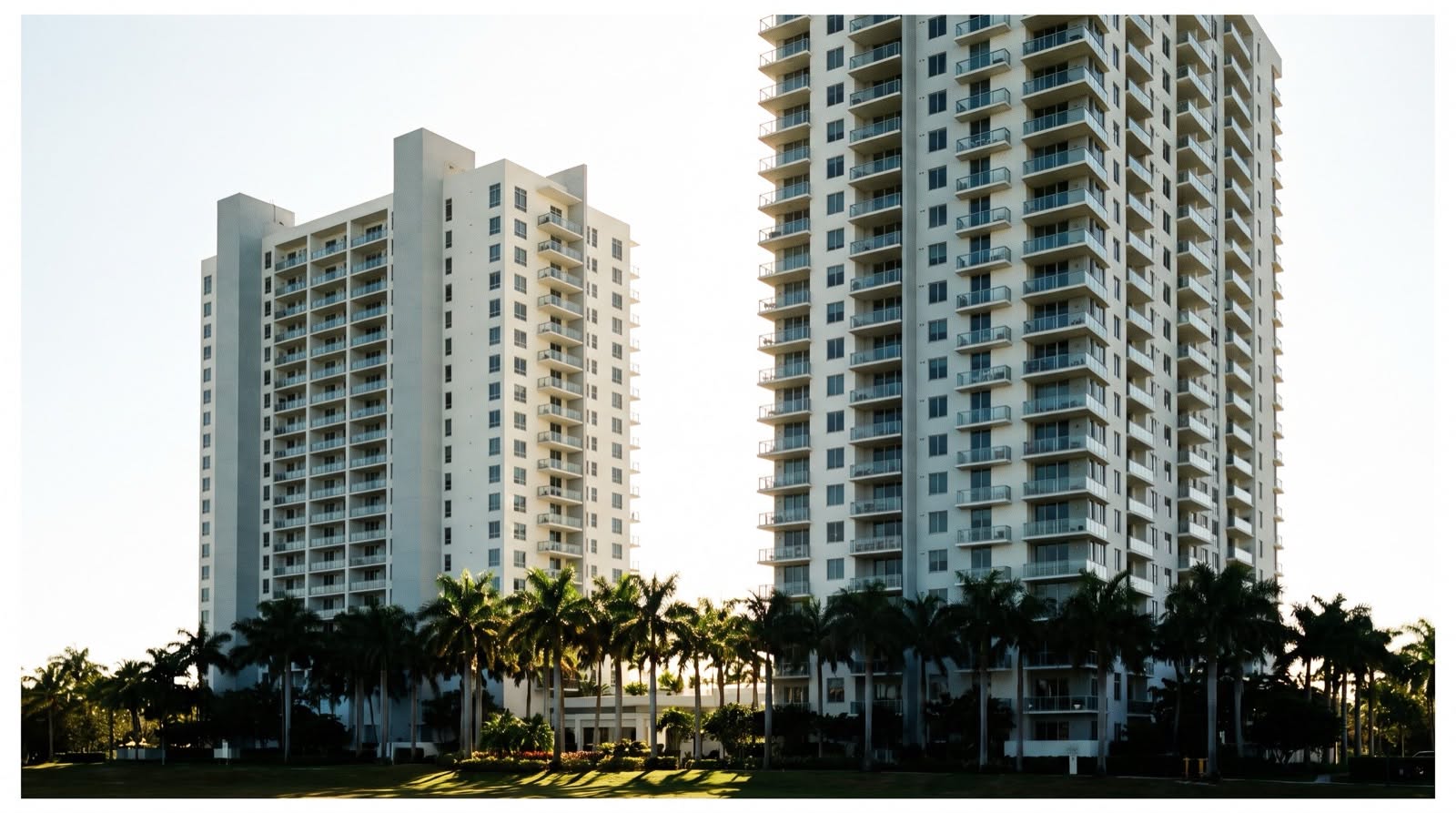
Single · early 30s · wanted a minimalist pad
He wanted a small flat as a one-bedroom-plus-home-gym base. The lifestyle math said yes. The asset math said something else.
Run the numbers both ways: the same percentage move yields roughly three times the gain on the bigger asset, and at his age, the loan leverage was his single biggest advantage. He rented the lifestyle, bought the asset, and the framework did the arguing.
The point: Question 2 (financial readiness) and Question 3 (purchase type) exist to catch exactly this: a fine lifestyle decision that's a poor asset decision.

Clients ready to sign · the advice no agent likes giving
The numbers didn't clear the framework. So the recommendation was: not yet.
Timing isn't about catching the absolute bottom. It's about not buying at the top, and the timing question (Question 7) is in the framework precisely because "wait" is sometimes the highest-value recommendation an agent can make.
The point: a framework with a real walk-away built in works for you even when it works against the agent.
After the download
No consultation required. No pitch unless the numbers earn it. Here's exactly how it goes.
The property you're considering: new launch, resale, or sub-sale. That's all I need to start.
Market direction, your financial fit, purchase type, development quality, pricing justification, floor premium, timing, scored against real transaction data.
The score is yours either way. Use it with me, with your own agent, or on your own.
At 50/70 or above, we can talk about the full consultation. Below that, I'll tell you what I'd look at instead. No pitch.
Honest fit check
→ It's built for you if
→ It's not for you if
Straight answers
Yes. The PDF, the scorecard, and one REB score on a property of your choice: free, no consultation required. The conversation only happens if the numbers earn it.
Then you'll know before you sign instead of after, which is the entire point. I'll tell you which questions it failed and what I'd look at instead. A low score on a property you haven't bought yet costs you nothing.
No. The framework is most valuable before the clock is ticking. Score the market now, learn what the seven questions look like in your target area, and when the right unit appears you'll move with a system instead of a feeling.
That's what the framework is built to protect first. Question 1 reads the cycle and the supply pipeline; Question 2 makes sure you're not stretched; Question 7 checks the timing. I can't promise the market never dips. I can make sure you enter with a buffer, a floor, and an exit that's still there when it matters.
You should. I consult on them at Stacked Homes twice a week. But articles analyze the market. The framework scores your property, against your finances, on your timeline. That's the difference between information and a decision.
No. The first thing you get is a score, not a pitch. If a property scores below 50/70, I'll tell you that, even if it costs me the sale. That discipline is why clients come back for their second and third moves.
In their words
One review, in full and unedited.
“As a business owner, I'm always pressed for time, so I appreciate that Norman's deep expertise in real estate helps me cut through the noise in the market and get to effective results fast.
I've made bad mistakes in the past buying property before I met Norman. Now, with his research and analysis, it helps me identify problems with even popular locations, and shows me the data about property price trends that I can take advantage of.
Even with the uncertainty during the pandemic, Norman's knowledge and experience gave me the confidence to enter the market. Since then, the market has moved significantly upwards, so I'm thankful for Norman's help. I'd highly recommend Norman for anyone who appreciates getting clarity with buying and selling real estate.”
 Alvin Poh
Serial entrepreneur and investor
Score your next property before you sign
Download the PDF + Scorecard. Run the seven questions on your shortlist. If you want me to sanity-check the score, send me the URL on WhatsApp afterward. Free.
Delivered within 60 seconds. WhatsApp follow-up only if you ask for one.